
|
My parents are from a generation where they’ll innocently ask “What do you want to be when you grow up!?” I’ve listened intently to our children answer this question over the years and from time to time, I find myself shocked at their responses. From basketball players and artists to scientists and student support assistants, their answers change yearly based on their current passions. 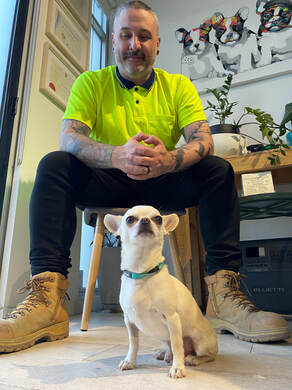 Until 2015, I only knew of Hydrotherapy for two reasons. Reason one was the 80’s classic movie Cocoon starring Steve Gutenberg which told the story of 3 men in a retirement village who suddenly discovered the fountain of youth in their local pool when an alien inadvertently laid an egg in the filtration system! Reason two was having watched seniors at the local swimming centre going through gentle exercises whilst immersed in the warmth of the water and watching their eyes sparkle as the literal weight of the world was lifted from their shoulders between our kids’ swimming lessons on Saturday mornings. By March of 2015, I would be joining those seniors for 6 months of Hydrotherapy after rupturing my Achilles tendon playing American Football for my beloved Western Crusaders. It’s quite humbling to be the youngest in the water at 35 years old when most of the other participants were well into their mid to late 70s and to hear the calls of “here comes the young buck” from a group of men whom I would go on to call “The Gentlemen!” “The Gentlemen” were a mixed bag of men from all walks of life who would meet 3 times a week to soak and work in the warmth of the water to help ease the burden of years of mistreatment and physical labour on their bodies. Unlike the ladies class in the lap pool that had a set sequence of movements (and reminded me a lot of the 5:30 am Aerobics Oz Style show that used to be on Channel 10 every morning) “The Gentlemen” would slowly walk around the Hydrotherapy pool gently rotating every joint in their bodies while openly discussing the sad and horrible state of the Carlton Football club. One of “The Gentlemen” would always say as he made his way past me towards the exit of the pool, “There’s magic in the water young buck!” and there really, truly was for him. His carefree and free-flowing movement in the water would slowly disappear as he emerged onto the steps and back to the pool deck. I would watch in disbelief as he shuffled towards his shoes and bag and walked towards the exit because of the difference the “magic in the water” made to his mobility. I had opted for a non-surgical recovery from my injury and the work I did in the water as well as Physiotherapy, dry needling and 100’s of hours ice rolling paid dividends when after 9 months of grinding 4-5 days a week, I was finally able to walk freely and wear 2 matching shoes again. The time I had spent recovering from the injury as well as the therapy to rebuild the wasted calf and surrounding muscles had given me an apprenticeship I didn’t even know I signed up for and when the opportunity to study Hydrotherapy came along in 2021, I was more than ready to dive head first into the deep and and see what new tricks this “young buck” could learn! 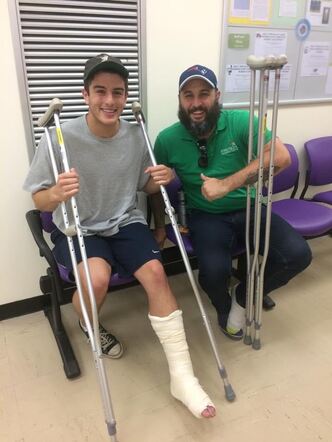 I met my now wife, the wise and wonderful Joanna Whitehead, in 2015 during my injury recovery when she used to volunteer as a medic for our football team and our paths would cross again in 2018 when I was working on a building site near her work where she was working as a Physiotherapist in and around the NICA school in Prahran. The rest as they say is history but meeting Jo would not only lead to the pathway we now find ourselves on together but also to an opportunity to work side by side in service to the canine community, here in metropolitan Melbourne. Jo had moved to Australia in 2008 with the mindset of diversifying from the human world of Physiotherapy and adding either equine or canine practice to her skill set but it wouldn’t be until 2018 when we met again and she told me of her dream to own and operate a business serving the needs of canines in not only Physiotherapy but also other modalities like Hydrotherapy that I began to recall my own recovery story over one of our many coffee dates not far from where our clinic operates today. She had been studying prior to the madness of 2020 and was ready to launch Canine Kinetics when the entire world shut down but for anyone who knows Jo, her patience knows no limits and when the clinic finally opened in 2021, my new pathway appeared. I often helped Jo in those first chaotic months as a spare set of hands in the clinic whenever I had a chance and was away from the wonderful world of joinery. I was the pool guy in charge of all things water, the towel guy in charge of drying patients post-session and even the phone guy who would help clients navigate their way through bookings and it was safe to say, the work we did was a far cry from the work I was used to. The feeling of joy watching doggos improving with each session filled me with satisfaction beyond just being the pool, towel or phone guy and it was late one night as we closed up the clinic when Jo suggested I take the leap and register to study as a Canine Hydrotherapist. I graduated from high school in Adelaide in 1998 and went on to complete my apprenticeship as a cabinetmaker/joiner in 2003 but since that time, I had never even thought twice about studying or furthering my education so the initial jump was met with this instant realisation that I was starting my new journey from a long way back. I had never shown a great deal of interest in science classes at school and when given the opportunity to remove science from my syllabus, I quickly opted for an arts and technology path which meant all things biology and anatomy were not only foreign to me but also there was no base information to work up from or recall. I had been working since completing my apprenticeship as a cabinet maker in multiple facets of the building industry and had found a real love for the front end of the joinery world working closely with clients to achieve their cabinetry dreams, one box, room or project at a time. I had worked for years on high-rise apartment projects, lux and ultra high-end architectural builds, overseas manufacturing processes and even camper vans and caravan’s so the daunting task of learning the structure and function of the canine anatomy was truly a process I found challenging. The course was filled with so much information that at times I was worried I’d bitten off more than I could chew but as the course progressed, the module and class structures along with some wonderful hands-on help from Jo saw me begin to weave the moving parts together and before long I was happily feeding my brain with structures and processes that would culminate with my graduation in 2022 and the beginning of my practice as a qualified Canine Hydrotherapist. The young buck not only loves his new vocation in the world of Hydrotherapy but also decided to return to the well of knowledge and as of 2024 will be able to offer our wonderful patients further insight into their fur babies with the completion of a course in Canine Behaviour, Training and Psychology. My love for not only the patients we service through the clinic but to the greater dog community as a whole has grown beyond comprehension but I am truly honoured to be a part of this amazing industry and when you hear me say during a session “there’s magic in the water” you’ll know the road I’ve travelled to get here has been one with more twists than usual but a journey that was well worth the time in the drivers seat. I look forward to many years ahead of working in this wonderful space and look forward to meeting as many of you as possible to help not only grow our community but to also never stop working for our doggos on their path towards recovery and the life they truly deserve. See you in the tank! Matt PS: I can now finally answer the question the next time my parents ask our kids about their hopes and dreams! Now that I’m grown up, I work with dogs and bring as much happiness and love to their lives as I can. AuthorMatthew Ireland - Canine Hydrotherapist Greyhounds are known for their remarkable speed and agility, as well as their gentle temperament, making them a popular choice for many pet owners, especially when they take up residence on the couch! Although Greyhounds are less susceptible to developing CCL injuries or other acute orthopaedic injuries than other breeds, there is a common problem that often goes unnoticed but can cause severe lameness: the development of corns on their paw pads. This can be a painful condition that is often compared to the feeling of having a stone in your shoe while walking. Lets take a closer look at what these ‘corns' are, how to identify them, and how to treat them effectively. 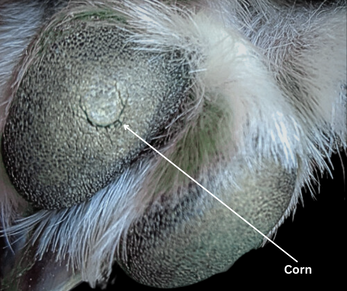 Causes: Corns in Greyhounds are hard, painful growths that typically appear on the paw pads. The exact cause of corns remains elusive, but several factors are believed to contribute:
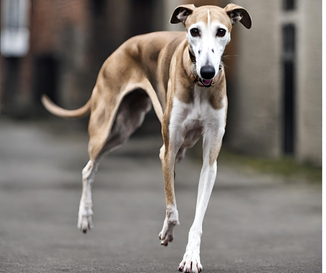 Abrasive surfaces like concrete can exacerbate the formation of corns over time Symptoms: Corns are a painful and distressing challenge for Greyhounds, emphasising the importance of early symptom recognition for timely intervention. These common indicators include acute lameness, with affected Greyhounds often favoring the afflicted paw; this lameness can vary in severity and may come and go. Upon close inspection of the paw pads, a characteristic hard, discolored, circular growth is often visible, confirming the presence of a corn. Applying direct pressure to these corns can elicit a pain response, further establishing them as a source of discomfort. In response to this pain, Greyhounds may engage in excessive licking or chewing of their paws in an attempt to alleviate their distress. Treatment Options Treating corns in Greyhounds can help relieve their pain and restore their mobility. Here are some treatment options to consider:
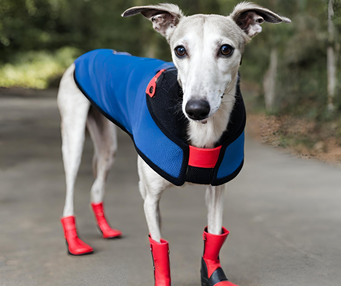 protective footwear can be an option for management of corns Prevention:
Maintaining the paw health of your Greyhound involves a proactive approach to prevent the development of corns. Several key preventative measures should be considered. Firstly, regular paw care is essential; frequent inspections of your Greyhound's paw pads help in the early detection of corns or any signs of damage. Secondly, proper conditioning of the paw pads is crucial, as keeping them moisturised and well-conditioned can help prevent excessive dryness, which is a contributing factor to corn formation. Additionally, weight management plays a significant role in preventing corns, as maintaining a healthy weight reduces the pressure exerted on the paw pads during physical activities. Lastly, it's advisable to choose walking surfaces carefully; whenever possible, opt for softer terrains like grass or sand, which can reduce the risk of corn development by minimising the abrasive effects on your Greyhound's paws. Corns can be a painful and debilitating condition for Greyhounds, causing acute lameness and distress. If you suspect your Greyhound has developed a corn, seek veterinary care promptly. By understanding the causes, recognising the symptoms, and exploring treatment options, you can help your doggo regain their agility and comfort, ensuring they continue to enjoy their active lifestyle. Deciding between a collar and a harness can be a common dilemma for any dog owner. Each option has its own set of advantages and disadvantages, even when the collar of the harness has been fitted properly. Making the right choice depends on several factors, including your dog's size, breed, behaviour and intended use.
Collars for Dogs Pros:
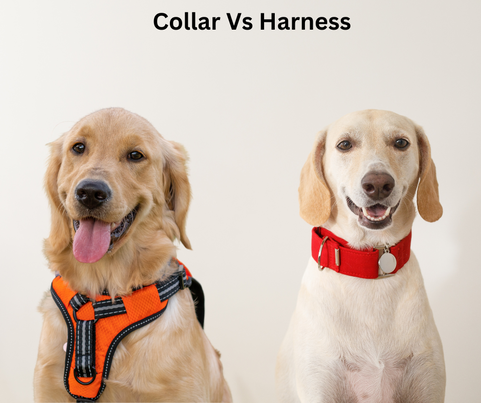
Harnesses for Dogs Pros:
Anatomical Consideration Understanding your dog's anatomy is crucial when deciding between a collar and a harness:
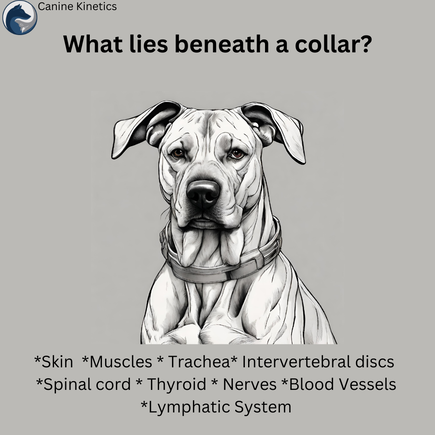 The choice between a collar and a harness for your dog should depend on your dog's individual needs, size, breed, and behaviour. For most dogs, a harness provides a safer and more comfortable option for both walking and general use. However, collars may be appropriate for specific training purposes or for dogs that tolerate them well. Regardless of your choice, always ensure that the equipment fits properly and is comfortable and if you are ever in doubt, have a chat to your friendly veterinarian or canine physiotherapist. |
AuthorJoanna Whitehead Archives
June 2024
Categories
All
|
 RSS Feed
